A clinically proven perineal massage and pelvic floor trainer designed to prepare your body for a safer, calmer vaginal birth.
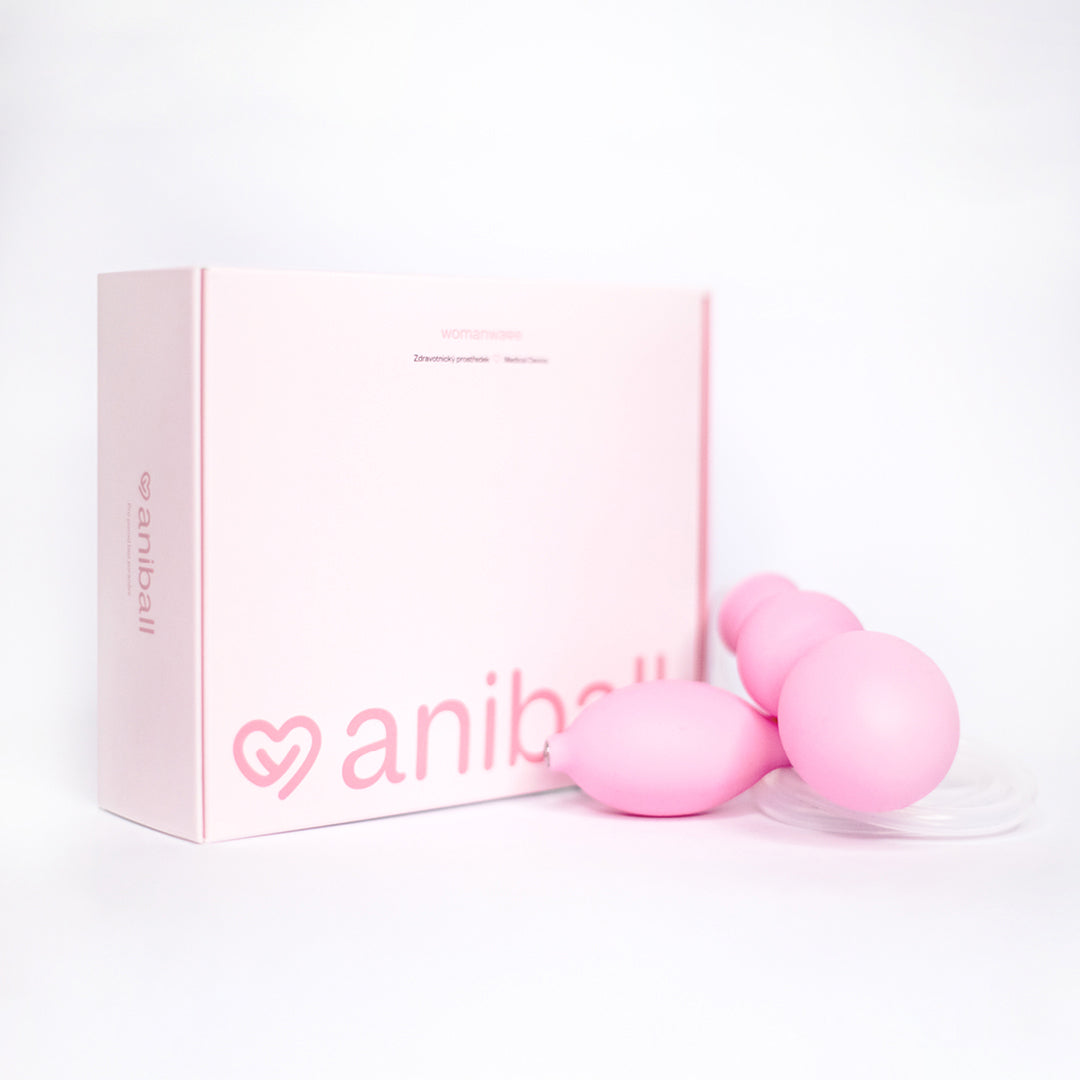
Aniball is a soft, inflatable balloon device that helps you prepare your perineum and pelvic floor for a vaginal delivery. It is simple, gentle, and effective.

Many parents-to-be find it really difficult to see, let alone reach, below the waist around a growing bump. Attempting self perineal massage becomes uncomfortable or practically impossible in the final weeks of pregnancy. Aniball is designed to solve exactly this problem.
Once the balloon is gently inserted, a lengthy tube connects it to a hand pump held outside the body — giving you complete control over inflation at all times. You can deflate immediately at any moment.
There is no awkward reaching, no guesswork about pressure, and no need for a partner. Just a calm, controlled daily practice that prepares both your body and your mind for labour.
"Preventing tearing in childbirth involves preparing the perineum through daily massage from 34–35 weeks, using warm compresses during labour, choosing upright or side-lying birthing positions and pushing slowly as the baby crowns."
NHS"Results from a Cochrane review suggest that perineal massage may be associated with higher rates of intact perineum and fewer incidences of third- and fourth-degree tears."
NICE Guideline NG235 · Intrapartum Care View source ↗Perineal trauma during childbirth is extremely common in the UK and its consequences are often underestimated. The data is stark:
The consequences go well beyond the birth itself — painful healing lasting weeks or months, scar tissue, pain during sex, stress urinary incontinence, anal incontinence, and significant emotional impact on postnatal wellbeing.
The good news: perineal preparation significantly reduces these risks. A growing body of international research confirms that the combined approach of perineal massage and pelvic floor training from around 34 weeks produces measurable, statistically significant benefits.
A significant body of international research shows that a combined approach — perineal massage together with pelvic floor training — produces outcomes significantly better than either alone. Pelvic floor exercises with voluntary contractions and relaxation, practised twice daily, showed the greatest benefit.
Key research papers
31.6% reduction in episiotomy and fewer 3rd/4th degree tears with daily perineal massage and pelvic floor exercises from 32 weeks.
Combined antenatal perineal massage and pelvic floor relaxation exercises in 200 first-time mothers confirming the benefit of the integrated approach.
Relative risk of 0.69 for preventing laceration with perineal massage within pelvic floor training programmes, versus no intervention.
Breathing exercises combined with pelvic floor muscle training and perineal massage improves delivery outcomes and promotes faster postpartum recovery.
Perineal massage during labour shown to reduce the incidence of 4th degree tears.
Aniball confirmed safe, does not cause premature dilation, and reduces episiotomy risk by 60%. BJM, Vol. 31, No. 2, February 2023.
A carefully designed programme of daily exercises builds the skills that matter most for a positive birth experience:
Many women have never consciously located or controlled these muscles. Aniball makes this tangible — you can feel the difference between tension and release in a way that exercises alone cannot replicate.
In labour, the ability to let go is just as important as strength. Your pelvic muscles need to release — not grip — as your baby is born. Aniball trains this response directly.
Slow, controlled breathing during crowning is one of the most clinically supported ways to reduce tearing. Aniball teaches you to use breath and body together, so the response becomes instinctive.
Posture significantly affects the pressure on your perineum. The programme includes guidance on positions that work with your body, not against it.
Knowing your body is prepared reduces fear and anxiety — and that preparation genuinely improves birth outcomes. You will arrive at labour informed, calm, and ready.
"Your goal is to be a calm, prepared mother who can consciously work with her body — one who understands her pelvic floor, trusts her breath, and gives her baby the best possible start."
Tearing during labour is common, but it is not inevitable. The evidence consistently shows that women who prepare their perineum and pelvic floor in the weeks before birth have significantly better outcomes. Here is what the research and clinical guidelines recommend:
The NHS recommends regular perineal massage from 34–35 weeks of pregnancy. This gradually stretches and softens the perineal tissue so it can expand more easily during delivery. Aniball makes this significantly easier to do consistently, especially when bump size makes manual massage difficult.
Most people know pelvic floor exercises as squeezing — but in labour, the ability to consciously release your pelvic floor is equally important. Research shows that combining contractions with deliberate relaxation exercises, twice daily, produces the greatest reduction in tearing. Aniball is specifically designed to train this response.
Breathing slowly through contractions, rather than pushing forcefully, allows the perineum to stretch gradually. When you practise this with Aniball in the weeks before labour, the breath-and-release response becomes instinctive when it matters most.
The NHS recommends upright or side-lying positions during the second stage of labour. These reduce the pressure on the perineum compared to lying on your back, and allow gravity to assist a more controlled delivery. Aniball's exercise programme includes position practice to help you find what works for your body.
NICE and NHS guidelines recommend the use of a warm compress on the perineum during the second stage of labour. This helps relax the perineal tissue and supports controlled stretching as your baby is born. Ask your midwife about this when preparing your birth plan.
"Results from a Cochrane review suggest that perineal massage may be associated with higher rates of intact perineum and fewer incidences of third- and fourth-degree tears."
NICE Guideline NG235 · Surveillance of Intrapartum Care View NICE source ↗Aniball brings together all of these evidence-based recommendations into one simple daily practice: perineal massage, pelvic floor relaxation, breathing, and position — so you can prepare your whole body, not just one part of it.
Begin using Aniball for pelvic floor awareness from around 34 weeks. The perineal stretching programme — which prepares your tissue for the stretch of crowning — starts at 36–37 weeks and continues daily until your due date.
Sessions take just 15–30 minutes a day, ideally after a warm bath or shower when muscles are naturally relaxed.
The NHS recommends perineal massage from 34–35 weeks. Aniball is designed to work perfectly alongside this recommendation — making the process easier, more controlled, and more effective than manual massage alone.
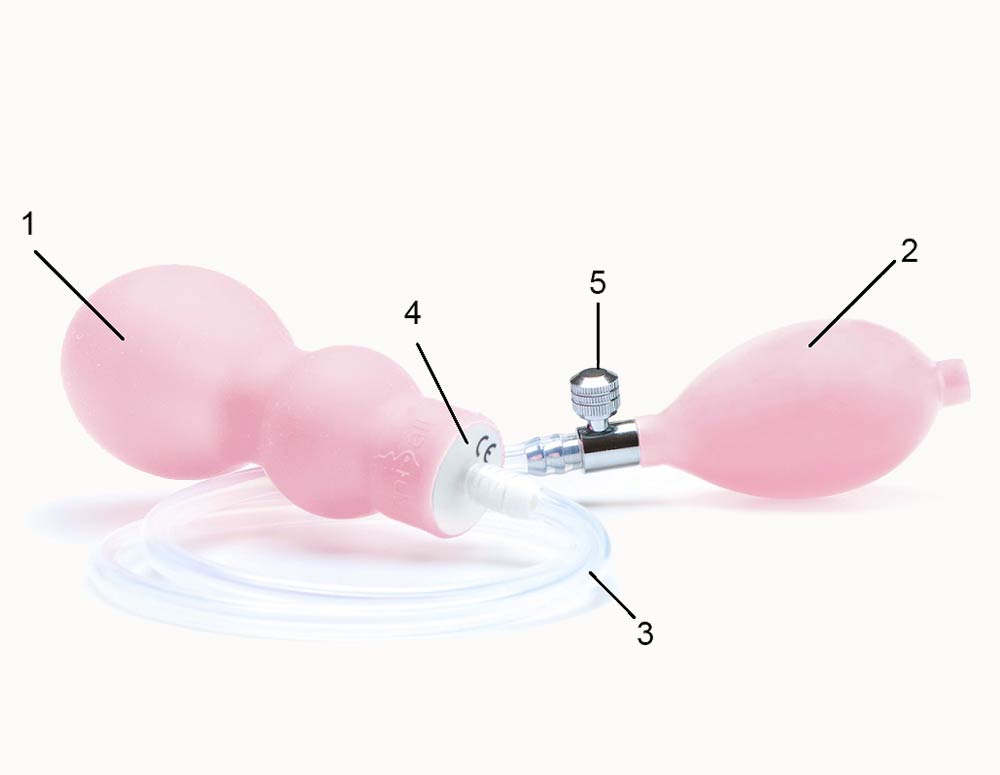
Respect your body and inflate the balloon only to a comfortable feeling of slight tension. The exercise must never cause pain or discomfort.
All components are made from body-safe, BPA-free, medical-grade silicone — free from harmful chemicals and tested to rigorous standards. Aniball has been tested in extreme conditions and the balloon safely disconnects from the adapter without bursting or damage.
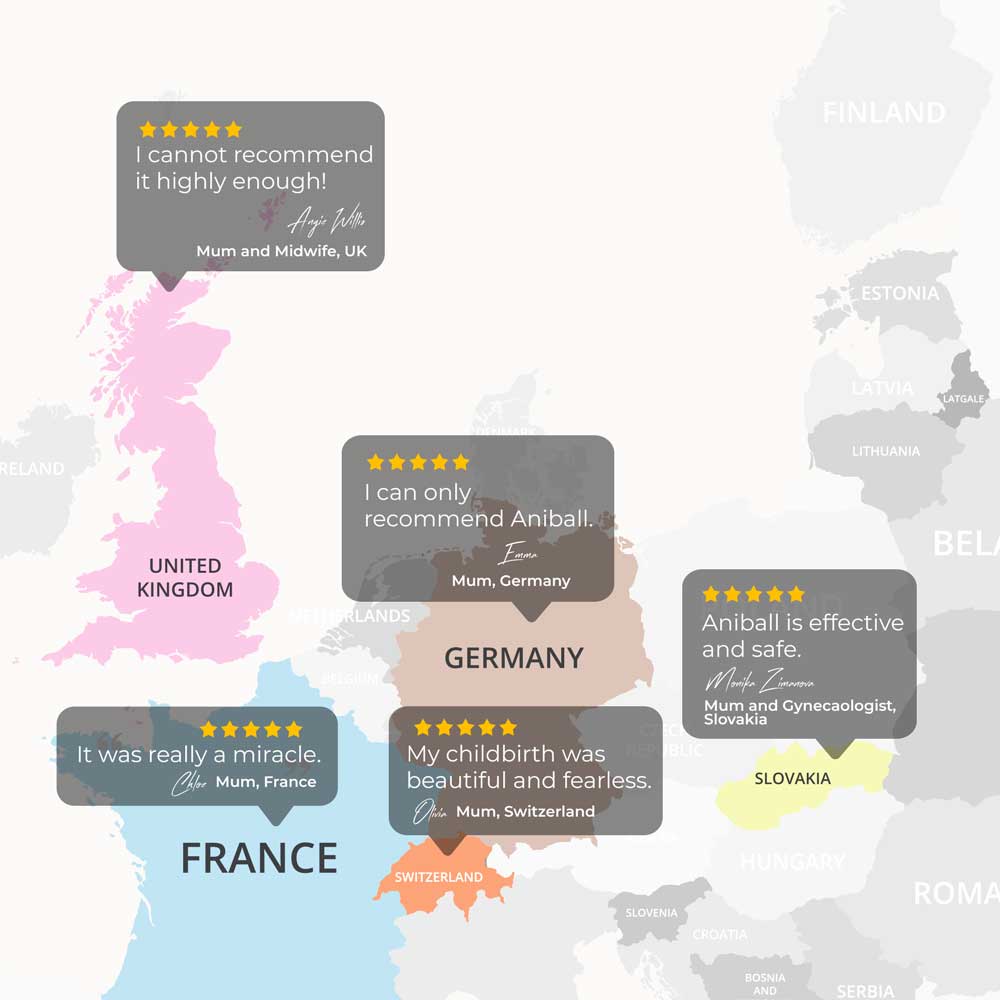
Aniball is recommended by obstetricians, midwives and women's health physiotherapists — and loved by the mums who use it.
"I cannot recommend it highly enough!"
Angie Willis — Mum and Midwife, UK"My childbirth was beautiful and fearless."
Olivia — Mum, Switzerland"Aniball is effective and safe."
Dr Monika Zimanova — Mum and Gynaecologist, Slovakia"It was really a miracle."
Chloe — Mum, France